
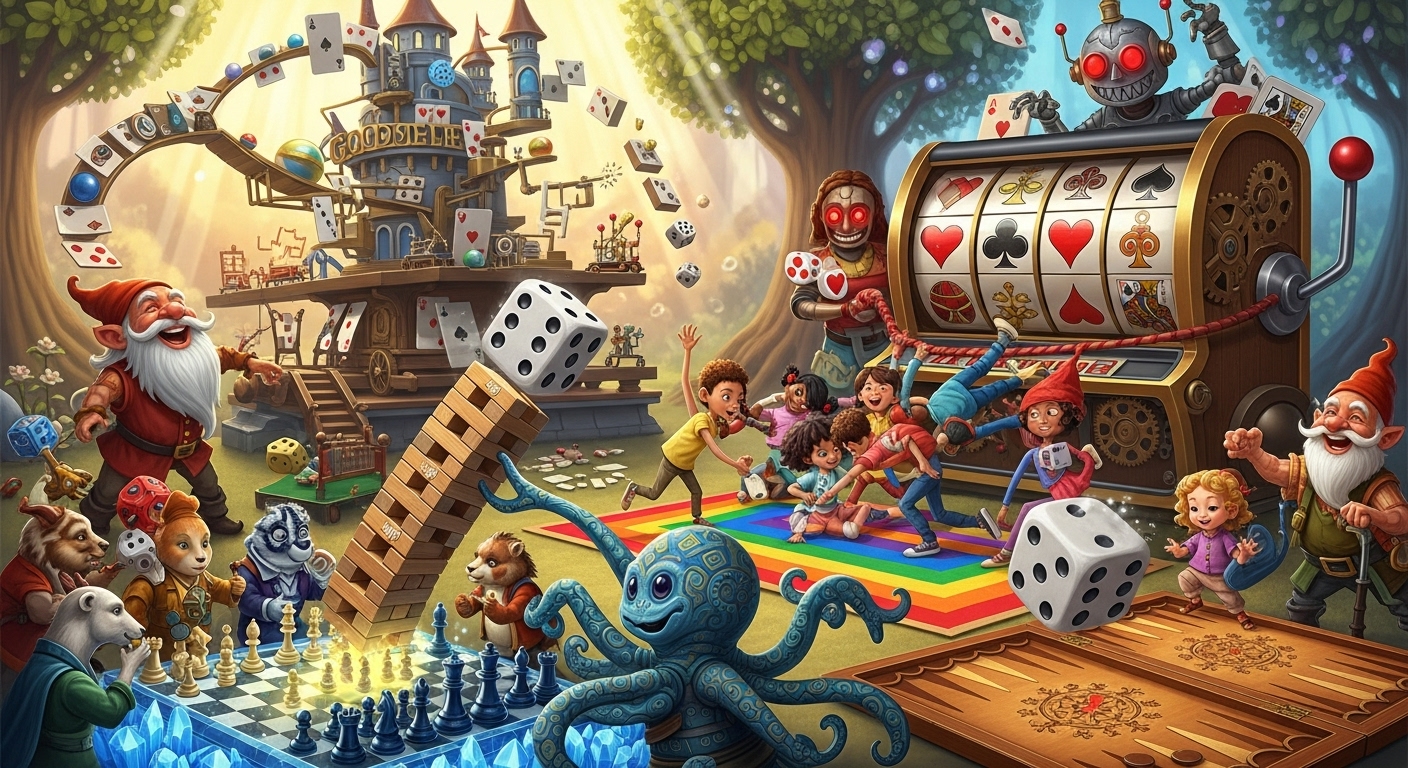
Games have always been more than simple pastimes. They are a reflection of human creativity, strategy, and social interaction. From ancient board games to modern video games, gaming has evolved into a multi-billion-dollar global industry that influences culture, technology, and daily life. Games entertain, challenge, and connect people across generations and geographies, making them an essential part of both leisure and cultural expression. In this blog, we will explore the history of games, their psychological and social impact, modern trends, and the future of gaming.
The Origins of Games: From Ancient Times to the Middle Ages
The history of games stretches back thousands of years. Ancient civilizations played games to entertain, teach strategy, and strengthen social bonds. The Egyptians played Senet, one of the earliest known board games, while the Chinese developed Go, a strategy game still popular today. Dice games in Mesopotamia and early forms of chess in India highlight humanity’s fascination with strategy, chance, and skill.
During the Middle Ages, games like chess, backgammon, and card games became widely popular in Europe. They provided mental stimulation, social interaction, and entertainment. Games during this era laid the foundation for modern recreational and competitive gaming, emphasizing logic, strategy, and social engagement.
Video Games: Interactive Entertainment in the Digital Age
The 20th century introduced video games, marking a revolution in interactive entertainment. Early arcade games like Pong, Space Invaders, and Pac-Man captivated players with simple yet addictive mechanics. As technology advanced, home consoles and personal computers allowed for increasingly sophisticated gaming experiences.
Modern video games span multiple genres, from role-playing games and strategy simulations to first-person shooters and open-world adventures. Games like The Legend of Zelda, Final Fantasy, and Grand Theft Auto have not only entertained millions but have also influenced popular culture, storytelling, and even music. Video games combine visuals, audio, and interactivity, offering players experiences impossible to replicate through traditional media.
Multiplayer and Online Gaming: Building Global Communities
The rise of the internet transformed gaming from a solitary or local activity into a global social phenomenon. Multiplayer online games allow players to compete or cooperate with others worldwide. Titles like Fortnite, League of Legends, and World of Warcraft have created vast digital communities where strategy, skill, and teamwork are key.
Online gaming promotes communication, collaboration, and social interaction. Players share experiences, form friendships, and participate in tournaments. Live streaming and esports have further elevated gaming, making it a spectator sport that draws millions of viewers. Online multiplayer gaming demonstrates that games are not just about play—they are about connection, culture, and shared experiences.
Mobile Gaming: Entertainment at Your Fingertips
Mobile gaming has expanded the reach of games to a broader audience. Smartphones and tablets allow people to play anywhere, anytime. Casual games like Candy Crush, Clash of Clans, and Pokémon GO have engaged millions of players globally, appealing to all ages and demographics.
Mobile games often integrate social features, including connecting with friends, sharing achievements, and competing in global events. This accessibility has transformed gaming into a universal form of entertainment, offering both casual engagement and competitive experiences. Mobile gaming demonstrates how technology can make games an integral part of daily life.
Board Games and Tabletop Gaming: The Timeless Appeal
While digital gaming dominates, board games and tabletop games continue to thrive. Chess, Monopoly, Settlers of Catan, and Dungeons & Dragons remain popular for their strategic depth and social interaction. Tabletop role-playing games allow players to create narratives, collaborate on adventures, and engage in imaginative problem-solving.
These games provide experiences that digital platforms cannot replicate. The tactile, face-to-face interactions in tabletop gaming foster social bonds, teamwork, and creativity. Even in a technology-driven world, board and tabletop games remain a valuable part of entertainment and cultural tradition.
The Psychology of Gaming: Why We Play
Games are inherently engaging because they satisfy fundamental psychological needs. They provide challenge, reward, and a sense of progression, giving players a feeling of accomplishment. Games also offer escapism, allowing players to explore alternative realities, test their skills, and experiment with decision-making.
Social interaction is a major motivator. Multiplayer games and cooperative challenges create opportunities for teamwork, friendship, and community engagement. Cognitive benefits include improved problem-solving skills, memory, and strategic thinking. Understanding the psychology behind gaming explains why it captivates millions and contributes positively to mental development.
Esports: Gaming as a Competitive Spectacle
Esports has transformed gaming into a professional and spectator-driven industry. Players train rigorously, compete in tournaments, and earn recognition and financial rewards. Games like Dota 2, CS:GO, and League of Legends have organized leagues and professional teams that attract millions of viewers worldwide.
Esports combines skill, strategy, and entertainment, providing spectators with high-stakes competition. Live commentary, interactive streaming, and fan engagement have elevated esports to mainstream entertainment. Competitive gaming now rivals traditional sports in terms of audience size and cultural impact, proving that games are more than leisure—they are professional pursuits and cultural events.
Educational and Cognitive Benefits of Games
Games are not only fun but also educational. Strategy, puzzle, and role-playing games develop critical thinking, problem-solving, and decision-making skills. Simulation games and strategy titles encourage planning, resource management, and creativity.
Educational games teach subjects such as math, language, history, and science through interactive gameplay. Balanced gaming can enhance attention, cognitive flexibility, and learning motivation. Games have become a tool for personal growth, showing that entertainment and education can coexist effectively.
Cultural Impact of Games
Games influence culture, art, and media in profound ways. They inspire movies, books, music, and fashion, reflecting and shaping societal values. Many games explore morality, identity, and human experience, offering interactive ways to understand complex social issues.
Games also facilitate social interaction across borders. Online communities, multiplayer platforms, and gaming conventions create shared experiences that foster cultural exchange and understanding. Gaming has become a cultural phenomenon, shaping how society communicates, collaborates, and celebrates creativity.
The Business of Gaming
The gaming industry is a global economic powerhouse. Revenue comes from console sales, PC and mobile games, in-game purchases, subscriptions, merchandising, and esports events. Game development supports careers in programming, design, marketing, and community management.
Technological innovation in graphics, artificial intelligence, virtual reality, and augmented reality drives the industry forward. Gaming’s financial and technological influence underscores its importance in modern entertainment and innovation. The industry continues to grow, attracting investment and expanding its global reach.
Challenges in Gaming
Despite its benefits, gaming faces challenges. Excessive screen time, addiction, and exposure to inappropriate content are concerns, particularly for younger players. Encouraging healthy gaming habits is essential for mental and social well-being.
Diversity and inclusion remain ongoing challenges. Ensuring representation and accessibility in games fosters a more welcoming community and enhances the cultural relevance of gaming. Addressing these challenges is key to maintaining sustainable growth and positive impact in the industry.
The Future of Gaming
The future of gaming is full of possibilities. Virtual reality and augmented reality are creating immersive experiences that blur the line between digital and physical worlds. Artificial intelligence will enable adaptive gameplay, personalized challenges, and intelligent non-player characters. Cloud gaming and cross-platform play will make high-quality experiences accessible globally.
Games are increasingly integrating with other entertainment sectors, including movies, music, and esports. Interactive storytelling, social engagement, and technological innovation will shape the next generation of games. Gaming is poised to remain a dominant form of entertainment and cultural influence for decades to come.
Why Games Will Always Matter
Games are more than entertainment; they are a vital part of human culture. They foster creativity, strategy, social connection, and cognitive growth. From ancient board games to modern virtual realities, games provide challenges, stories, and experiences that enrich lives.
In a fast-paced and digital world, games remain a universal form of engagement. Their ability to evolve, innovate, and connect people ensures that they will continue to shape culture, entertainment, and society for generations. Games are not just play—they are a reflection of human imagination, skill, and community.