
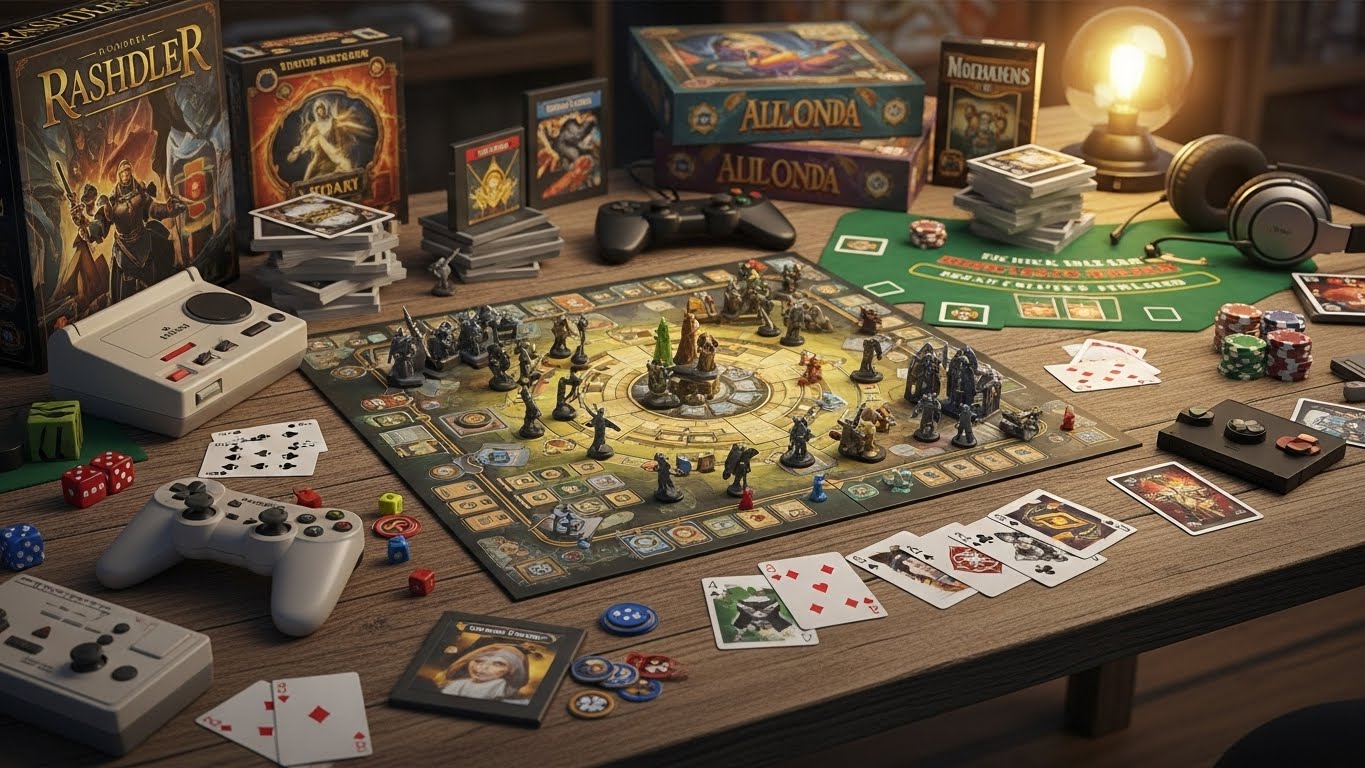
Games have been a part of human culture for centuries. From ancient board games like chess and go to modern-day video games that transport players to immersive virtual worlds, games are an integral part of the human experience. They provide an escape, a challenge, and an opportunity for connection. Beyond entertainment, games have profound effects on mental health, cognitive development, and social interaction. As technology evolves, so too do the types of games we play, and their impact on individuals and society grows ever more significant. In this blog post, we’ll explore the fascinating world of games, how they’ve evolved, and why they remain such a powerful force in our lives today.
The Ancient Roots of Gaming
The history of games dates back thousands of years. The oldest known game is Senet, an Egyptian board game from around 3100 BCE, which was played by the pharaohs. In ancient civilizations, games were often seen as more than mere entertainment; they were important social and cultural rituals. For example, in Greece, the Olympic Games were not only a display of athletic prowess but also a way to honor the gods and promote unity among Greek city-states. Similarly, games like Go in China and Chaturanga (a precursor to chess) in India were not just pastimes but intellectual and strategic pursuits that tested the minds of players.
As time passed, games evolved and began to spread across cultures. In Europe during the Middle Ages, board games and dice games became popular among nobility, and card games were introduced from Asia in the 14th century. These games not only entertained but also served as tools for socializing and forming alliances. Games also helped to pass down traditions, values, and stories, contributing to the cultural fabric of societies.
The Rise of Modern Games
The 20th century brought a revolution in the world of games. With the advent of technology and mass production, games became more accessible and varied. Board games like Monopoly, Scrabble, and Clue dominated family living rooms, while card games like Poker and Bridge became staples of social gatherings. The widespread availability of television and later personal computers opened the door to a new kind of gaming experience: video games.
The first video games were relatively simple, consisting of basic graphics and gameplay. Pong, released in 1972, was one of the earliest examples of an interactive video game that became a cultural phenomenon. The 1980s saw the rise of iconic arcade games like Pac-Man and Space Invaders, which were not only fun to play but also sparked the beginning of the video game industry as we know it today. Home consoles like the Nintendo Entertainment System (NES) further propelled video games into mainstream entertainment, making it possible for people to play at home with family and friends.
The 1990s and 2000s ushered in a new era of video games with advanced graphics, more complex storylines, and the introduction of multiplayer online gaming. Franchises like Super Mario, The Legend of Zelda, and Final Fantasy became household names, while games like Doom and Counter-Strike helped to shape the world of competitive gaming and online communities.
The Power of Play: Why Games Matter
Games are far more than just a means of entertainment. They have a unique ability to engage players, challenge their minds, and foster connections with others. Whether it’s the strategic depth of chess or the fast-paced action of a first-person shooter, games offer an array of benefits that extend beyond mere enjoyment.
Cognitive Benefits
One of the most significant advantages of gaming is its impact on cognitive development. Games require players to think critically, solve problems, and make quick decisions. Strategy games like Civilization or StarCraft challenge players to think several steps ahead, weighing the pros and cons of every decision. Puzzle games like Tetris and Portal stimulate the brain by requiring players to analyze patterns, think spatially, and approach problems from multiple angles.
Even action-packed video games require cognitive skills. Research has shown that action games can improve hand-eye coordination, reaction time, and multitasking abilities. Players who engage in fast-paced games such as Call of Duty or Fortnite often have better reflexes and quicker decision-making skills than non-gamers. The ability to think under pressure, react to changing conditions, and adapt strategies is crucial not just in gaming but in everyday life as well.
Social Connections and Communities
Games are inherently social. Whether played in person or online, games bring people together. Board games, card games, and role-playing games provide an opportunity for individuals to bond, laugh, and even compete in a friendly environment. In fact, many people build lifelong friendships through gaming.
Online multiplayer games have taken this social aspect to new heights. Games like World of Warcraft, League of Legends, and Fortnite have created global communities where players from all over the world can interact, collaborate, and compete. These communities often transcend borders and cultural differences, uniting people around a shared passion. For many, gaming is not just about playing but about being part of a larger community of like-minded individuals.
Furthermore, games have evolved to become more inclusive. Today’s gaming landscape is diverse, with games catering to a variety of interests, ages, and skill levels. From casual mobile games to intense eSports tournaments, there is a game for everyone. This inclusivity has helped break down barriers and make gaming a more widely accepted and celebrated form of entertainment.
Emotional and Psychological Benefits
Games also have profound psychological benefits. Engaging in play allows individuals to escape the stresses of everyday life, providing a much-needed mental break. For some, games offer a safe space to unwind and relax. The immersive worlds of role-playing games (RPGs) like The Witcher or Skyrim allow players to explore new realities and take on different personas, offering an experience that can be both therapeutic and exciting.
Moreover, many games encourage a sense of accomplishment and achievement. Completing a difficult level, mastering a challenging puzzle, or achieving a high score provides a sense of pride and satisfaction. This can be especially important for individuals seeking validation or a confidence boost. Competitive games, especially in the realm of eSports, can provide opportunities for players to showcase their skills and gain recognition for their talents.
In addition, many games have been used as tools for therapy and mental health treatment. Video games are increasingly being incorporated into therapeutic settings to help individuals cope with anxiety, depression, and other mental health issues. For example, games that encourage mindfulness and meditation have been found to reduce stress and promote emotional well-being. Similarly, virtual reality (VR) games are being used to help patients recover from physical injuries by guiding them through rehabilitation exercises in a more engaging and enjoyable way.
The Evolution of Competitive Gaming and eSports
Competitive gaming, or eSports, has exploded in popularity over the past two decades. What started as small LAN parties and local tournaments has evolved into a global industry worth billions of dollars. Professional eSports players now compete in games like League of Legends, Dota 2, and Counter-Strike: Global Offensive for substantial prize money, sponsorship deals, and a global fanbase.
The rise of streaming platforms like Twitch and YouTube has played a crucial role in the growth of eSports. Fans can now watch live streams of their favorite players and teams, participate in discussions, and even interact with players through chat features. This level of engagement has helped transform gaming into a spectator sport, with millions tuning in to watch tournaments and championships. Major events like The International (Dota 2) and The League of Legends World Championship attract audiences comparable to traditional sports events.
The rise of eSports has also opened up new career opportunities for individuals involved in gaming. From professional players to streamers, coaches, analysts, and event organizers, the eSports industry provides a wide range of career paths for those passionate about gaming. Colleges and universities are now offering scholarships for competitive gamers, further legitimizing gaming as a viable career option.
The Future of Gaming: Virtual Reality and Beyond
The future of gaming is bright, with technology continuing to push the boundaries of what’s possible. Virtual reality (VR) and augmented reality (AR) are poised to revolutionize the gaming experience. VR games, which immerse players in fully realized 3D environments, offer a level of interactivity and immersion that traditional games cannot match. Whether exploring alien planets in No Man’s Sky or solving puzzles in Half-Life: Alyx, VR has the potential to transform how we engage with games and the world around us.
Augmented reality (AR) is another technology that is already making waves in gaming. Games like Pokémon GO have shown the world the potential of AR, blending the virtual and physical worlds in ways that were once unimaginable. As AR technology continues to improve, we can expect more games that merge the digital and real worlds, offering players an entirely new way to interact with their environment.
In addition to VR and AR, advancements in AI and cloud gaming are expected to continue shaping the future of gaming. AI-powered NPCs (non-playable characters) will become more realistic and responsive, enhancing the storytelling and gameplay experience. Cloud gaming services, which allow players to stream games without the need for powerful hardware, are making gaming more accessible to a wider audience. This shift could fundamentally change the gaming industry, offering a seamless, platform-independent experience.
Conclusion: The Enduring Power of Games
Games are much more than just an escape; they are a powerful force that shapes our cognitive, emotional, and social lives. Whether through fostering critical thinking, building social connections, or providing a therapeutic outlet, games offer numerous benefits that extend far beyond entertainment. As technology continues to evolve, the world of games will only become more immersive, interactive, and inclusive.