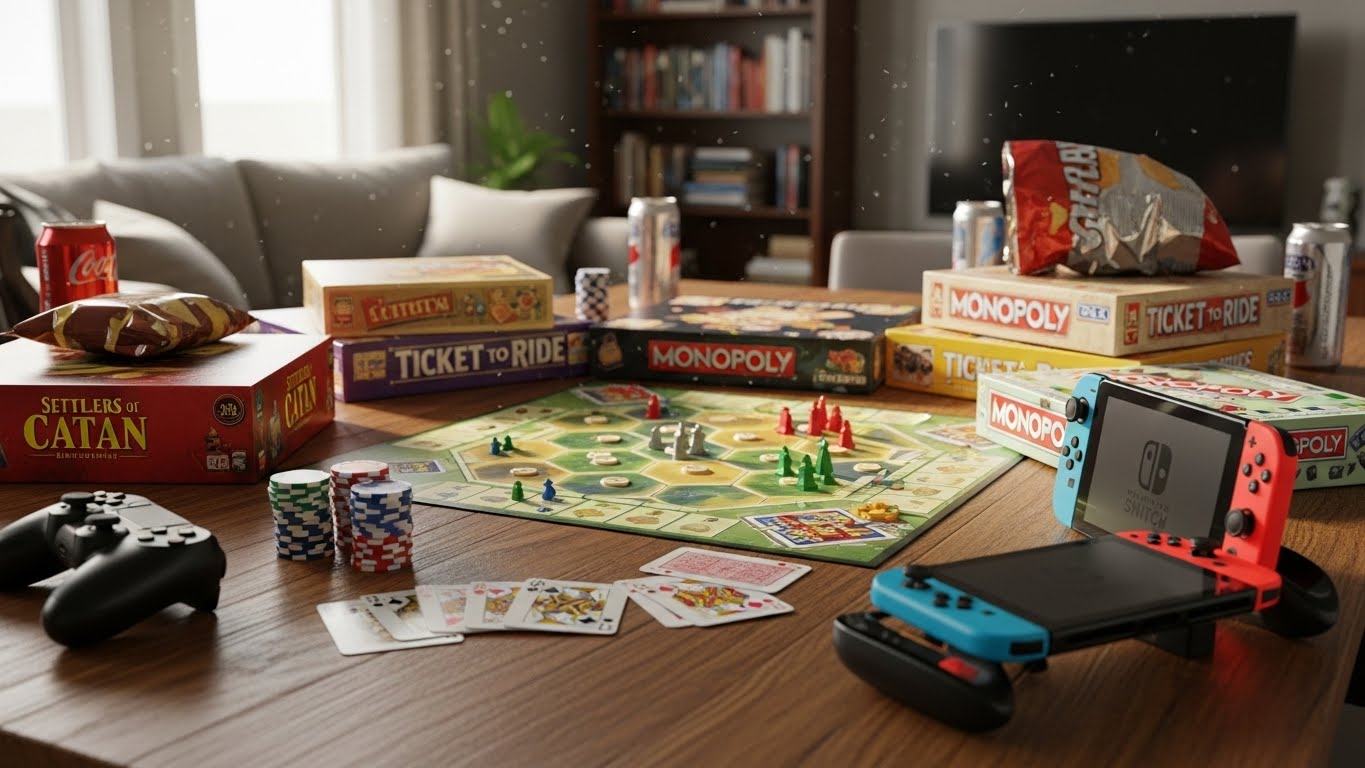

Gaming has evolved tremendously over the past few decades. What started as a simple way to pass time with pixelated characters and basic objectives has now transformed into a multi-faceted world where imagination, strategy, and social interaction converge. In this blog post, we explore games that are not just entertaining but also unique in the way they engage players, challenge perceptions, and sometimes even redefine what it means to play.
The Rise of Immersive Gaming Experiences
In the early days of gaming, the focus was primarily on challenge and scorekeeping. Classic games like Pac-Man, Space Invaders, and Super Mario Bros captured players with their simplicity and addictive mechanics. While these games remain timeless, modern gaming has pushed the boundaries, creating experiences that are as much about storytelling and exploration as they are about gameplay. Today, immersive games allow players to step into virtual worlds that mirror reality, explore fantastical realms, and even influence narratives in ways that were once unimaginable.
Games like “The Legend of Zelda: Breath of the Wild” exemplify this trend. Players are not just following a set of rules; they are exploring a vast world with countless possibilities. The game encourages creativity, experimentation, and discovery, rewarding players who think outside the box. The freedom to interact with the environment in meaningful ways elevates the game beyond mere entertainment, transforming it into a personal adventure.
Narrative-Driven Games That Break the Mold
While action and strategy games have their place, narrative-driven games offer unique experiences by prioritizing story and character development. These games focus on emotional engagement, often leaving a lasting impression on players long after they put down the controller.
One notable example is “Journey,” a game that relies on visual storytelling rather than dialogue. The player controls a robed figure traversing a vast desert toward a distant mountain. The simplicity of the game is deceptive; every step, encounter, and environmental detail is designed to evoke emotion and reflection. The unique multiplayer aspect, where players can encounter other anonymous travelers, adds a layer of connection without words, emphasizing the universal human experiences of cooperation and empathy.
Similarly, games like “Life is Strange” tackle complex themes such as friendship, morality, and the consequences of choices. By allowing players to make decisions that directly influence the outcome of the story, these games create a sense of agency that traditional media cannot replicate. The ability to explore alternate realities and reflect on the moral weight of decisions makes these games intellectually and emotionally stimulating.
Innovative Gameplay Mechanics That Challenge Conventions
What truly sets a game apart is often the mechanics that govern how it is played. Innovative gameplay can transform a standard concept into a groundbreaking experience, challenging players’ expectations and encouraging fresh approaches.
Take “Portal,” for instance. At first glance, it may appear to be a simple puzzle game, but its portal-based mechanics revolutionized how players approach problem-solving. The core mechanic—creating interconnected portals to navigate spaces—requires spatial reasoning, creativity, and lateral thinking. The game’s humor, combined with a minimalist narrative, enhances its charm, making it memorable and intellectually stimulating.
Another example is “Katamari Damacy,” a game where players roll a sticky ball around various environments, collecting objects to grow in size. Its quirky concept, whimsical soundtrack, and playful physics mechanics created a game that defies conventional logic yet remains endlessly entertaining. These games demonstrate that innovative mechanics can captivate players as much as stunning graphics or complex narratives.
Social and Cooperative Games: Playing Together in New Ways
While single-player experiences offer personal immersion, multiplayer and cooperative games bring a social dimension to gaming that is equally transformative. Games designed around collaboration, competition, and communication foster connections that extend beyond the virtual world.
“Among Us” became a cultural phenomenon by turning social deduction into a fun and tense multiplayer experience. Players must work together to complete tasks while identifying impostors among them. The game’s simple mechanics are elevated by the social interaction and strategy involved, creating unpredictable and engaging gameplay. Similarly, “Overcooked” challenges players to coordinate in chaotic kitchen environments, requiring teamwork, timing, and communication. These games demonstrate that multiplayer experiences can be uniquely entertaining by emphasizing human interaction and shared problem-solving.
Games as Artistic Expression
In recent years, games have increasingly been recognized as a form of artistic expression. Developers experiment with visuals, sound design, and interactive storytelling to create experiences that rival traditional art forms.
Games like “Gris” and “Ori and the Blind Forest” use breathtaking visuals and music to evoke emotion and convey narrative. The artistry in these games extends beyond aesthetics; it is intertwined with gameplay mechanics, creating a holistic experience that engages players on multiple levels. “Gris,” for example, uses color and environmental design to symbolize stages of grief, turning each level into a metaphorical journey. This fusion of art and interactivity highlights the potential of games to communicate complex ideas and emotions in a uniquely immersive medium.
Educational and Thought-Provoking Games
Beyond entertainment, games can also serve as tools for learning and critical thinking. Educational games and serious games leverage interactivity to teach concepts, promote problem-solving, and stimulate curiosity.
Titles like “Kerbal Space Program” allow players to explore physics, engineering, and space exploration in a hands-on way. By designing rockets, calculating trajectories, and completing missions, players learn scientific principles through trial and error, making education both engaging and memorable. Similarly, games like “Papers, Please” challenge players to consider ethical dilemmas and social issues. As a border checkpoint inspector, players must balance rules, compassion, and personal survival, highlighting the moral complexity of bureaucracy and decision-making. These games demonstrate that play can be intellectually enriching and socially relevant, blurring the line between entertainment and education.
The Role of Indie Games in Innovation
Indie games have become a driving force behind unique gaming experiences. Without the constraints of large studios or commercial expectations, indie developers experiment with unconventional ideas, resulting in games that are often more personal, creative, and daring.
Titles like “Hollow Knight” showcase the potential of indie games to compete with mainstream productions. With intricate level design, fluid combat mechanics, and a hauntingly beautiful world, the game demonstrates that passion and creativity can rival large-scale productions. Other indie games, such as “Stardew Valley,” provide open-ended, relaxing gameplay that prioritizes creativity, community, and player choice over high-stakes challenges. The indie game scene continues to expand the boundaries of what games can be, offering experiences that are diverse, innovative, and often unforgettable.
The Future of Gaming: Blurring Reality and Imagination
Looking ahead, the future of gaming promises even more unique experiences as technology continues to advance. Virtual reality, augmented reality, and artificial intelligence are opening new possibilities for immersion, interaction, and storytelling.
Virtual reality games allow players to physically inhabit game worlds, making every movement and action part of the experience. Augmented reality games integrate digital elements into the real world, creating playful interactions that merge imagination and reality. Artificial intelligence enables dynamic worlds that adapt to player behavior, offering personalized narratives and emergent gameplay that respond to individual choices. As these technologies develop, the line between gaming and reality will blur, creating experiences that are deeply personal, interactive, and transformative.
Conclusion: Redefining the Joy of Play
Games have come a long way from their humble beginnings. Today, they are not just a form of entertainment but a medium for storytelling, creativity, learning, and social interaction. The most unique games push boundaries, challenge conventions, and offer experiences that resonate emotionally, intellectually, and socially. From immersive worlds and narrative-driven adventures to innovative mechanics and artistic expression, games continue to redefine what it means to play.
In exploring these diverse experiences, one thing becomes clear: the joy of gaming lies not only in winning or completing objectives but in the journey itself. It is about discovery, experimentation, and connection—whether with other players, characters, or oneself. As technology and creativity evolve, the possibilities for unique, transformative games are limitless, promising a future where play is more enriching, imaginative, and meaningful than ever before.